
The Twenty-Four Hour Symphony
I have a personal condition I’d like to share. Around the middle of almost every afternoon the wheels fall off my car, the air goes out of my balloon and the lead slips out of my pencil. I’m good for nothing. It’s not unusual to find me around 3pm sat gazing numbly into space, totally incapacitated. Where we have many words for it - malaise, torpor, despondency, lassitude, brain fog, apathy - the French sum it up nicely with one: accidie.
Where did my energy go? It's tempting to think in these wasted hours that something is wrong with me. Something organic. After all, I physically feel awful as well as mentally spent. If I was inclined to, I may even visit my doctor to ask for tests. Or go online, where I will be offered any number of supplements or lifestyle hacks, before being told to go and see my doctor for tests.It is understandable enough when we attribute a loss of energy to some hormonal or vitamin deficiency. Certainly conditions like anaemia and low iron, or hypothyroidism can mess with our energy levels. But in most cases our energy levels fluctuate, and we’re able to function well enough for certain periods before energy seems to drain away, which suggests it’s not just a simple deficiency.
Or, it is tempting to think of exhaustion as the depletion of some kind of energy reserve. Over the years and months we have been spending our energy on all manner of things: work, relationships, caring, etc. and neglecting our own needs, until at some point we cross some critical threshold beyond which we can no longer replenish our energy stores faster than we spend them. Even if we rested for a week, two weeks, six months…try as we might the reservoir has run dry. We have burned out.
The problem with this is that we know that our body is continually producing energy at a pretty steady rate. In fact, there is no ‘stock’ of energy hidden within us to be drained; the body usually has more than enough fuel for metabolism, and in only quite extreme cases is the body unable to produce enough energy to function: extreme starvation, say, or a diabetic emergency. I may feel like I’m completely drained of energy - it makes sense psychologically - but this is not the physical reality.
Of course to say exhaustion is ‘in the mind’ is just as misguided. This also implies some separate part of us, a kind of mini-God who doesn’t get their hands dirty in the organic reality of the body but nevertheless exerts control over it.
It’s therefore clear that the experience of exhaustion, fatigue and brain fog isn’t quite what we think it is. So what could account for it?
A more convincing explanation is that when my energy is off, I am experiencing a mismatch between my internal rhythms and the world I live in. In those lost hours of the afternoon my body is telling me to do very little, and if I were a cave-dwelling hunter-gatherer I probably would be. I’d be pottering about, gossiping, idling, maybe going for a walk. I on the other hand - Mr McGenius Modern Man - have meetings to attend, people to talk to, emails to send, tasks I need to get finished. I need to be productive. But my body has other ideas. And so we clash, and herein lies the problem. Rather than listening to the signals from my body, I’m getting distracted by the noise of the modern world.
From the dawn of their evolution, organisms like animals and plants learned to adapt to natural cycles, the most obvious being the rising and setting of the sun. Those creatures that could recognise when the day was starting and light was dawning had an advantage; for instance in being able to hunt for food or escape being it. Scientists have even discovered the mechanism that explains this, an ingenious little molecular clock in each of our cells which resets every 24 hours. Those of us that regret the invention of the watch can perhaps be reassured that it was invented long before we had wrists.
Our HPA (hypothalamic-pituitary-adrenal) axis also regulates our body rhythms. It manages the release of cortisol, which peaks early in the morning and then slopes down pretty quickly before flat-lining around noon. If you look at a chart of our circadian cycle, it becomes quickly apparent that by the afternoon we really shouldn’t be attempting to do anything productive.
Melotonin is the yin to cortisol’s yang and this peaks around bedtime and conversely drops off by morning. The brain can modulate this process if needed, boosting cortisol levels, for example if we’re under stress, to increase alertness and suppress inflammation. Yet while it’s doing this it is also releasing ‘counter-measures’ to wind down the process so that our immune system doesn’t become chronically suppressed. It’s an ingenious feedback loop.
Inflammation is something of a health pariah these days. However, while inflammation may be pesky when we’re trying to function, it is necessary when we’re trying to heal. Luckily for us, this inflammation-healing peaks when we’re asleep - usually - so we don’t notice it. Of course, thanks to a modern economy designed to maximise stress for as many people as possible, many of us are chronically releasing cortisol to suppress our immune-inflammatory response, which then bubbles up anyway causing all manner of problems.
Our cells, tissue, organs, and systems are all connected by feedback loops such as the one overseen by the HPA axis. There are even loops within cells. Overall, they form an intricate regulatory system that aims to keep our body at optimal conditions. Another example is the thermo-regulatory system (basically ‘central heating’). Around sixty per-cent of the energy produced by our mitochondria is spent just on keeping us warm, so all the other reactions can happen. There are feedback loops that regulate energy, temperature, thirst, hunger, libido, sleep… really, all the ingredients of a good night out.
The question arises of ‘who’ exactly oversees all of these regulatory systems of the body. It certainly isn’t my conscious brain, which can barely organise my wardrobe. There’s been a lot of research into this and there is evidence of some kind of influential network in our brains overseeing the overall goals of surviving and thriving. Here I could talk about central governors, default neural networks, the autonomic nervous system, or even attempt to impress the reader with long words like the hypothalamic periventricular nucleus…
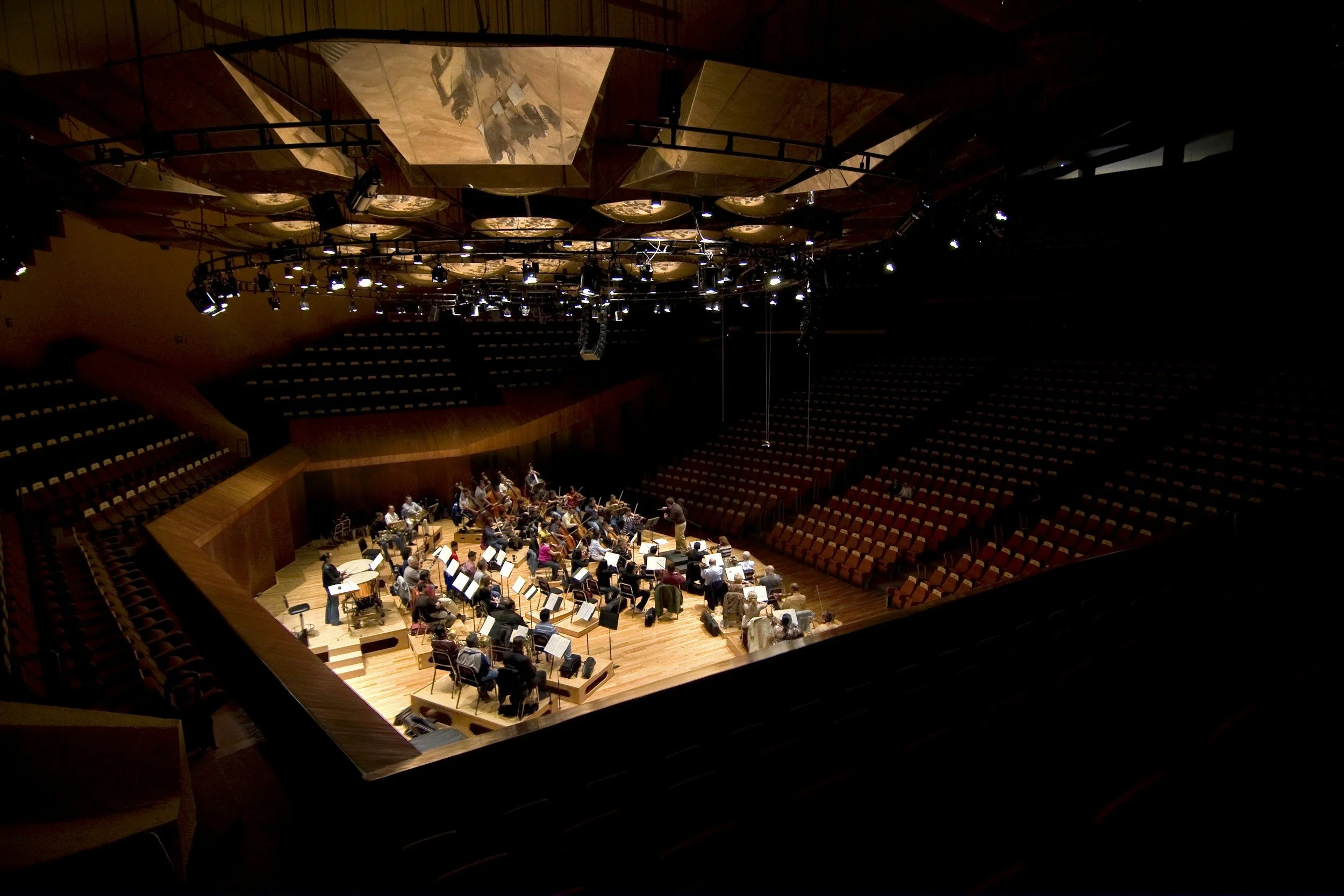
Or simply fall back on a handy metaphor. I like to think of our central regulator as the conductor of an orchestra. Even though each musician is highly skilled, and each section is able to work together, it's still very easy to slip out of sync with the orchestra as a whole (if you've ever played an instrument along with a metronome you'll see how easily this happens). The conductor is there to synchronise the whole performance.
Alternatively, you could imagine it as a music producer, the indispensable ‘hidden’ member of any band, who oversees the overall feel of the music, gets the levels right, and without whose gentle control the musicians would likely fall into an endless cycle of jamming, drinking tea and stealing each other’s partners. In the same way that the conductor keeps time and controls the volume and pace, or the producer gets the album sounding right, our regulator gets us through each 24 hours more or less intact.
So where does this leave me with my mid-afternoon ennui? Well, much the same. But perhaps I can be reassured that I’m not broken, requiring some external fix, or in need of an extended recharge that will never happen. I just need to respect my rhythms. The lessons, for what they’re worth, are perhaps just too simple for my modern mind to comprehend: when I’m tired, rest; when I’m hungry, eat; and don’t expect to get anything useful done after 11 o’clock in the morning. There’s always tomorrow.