
And Yet…
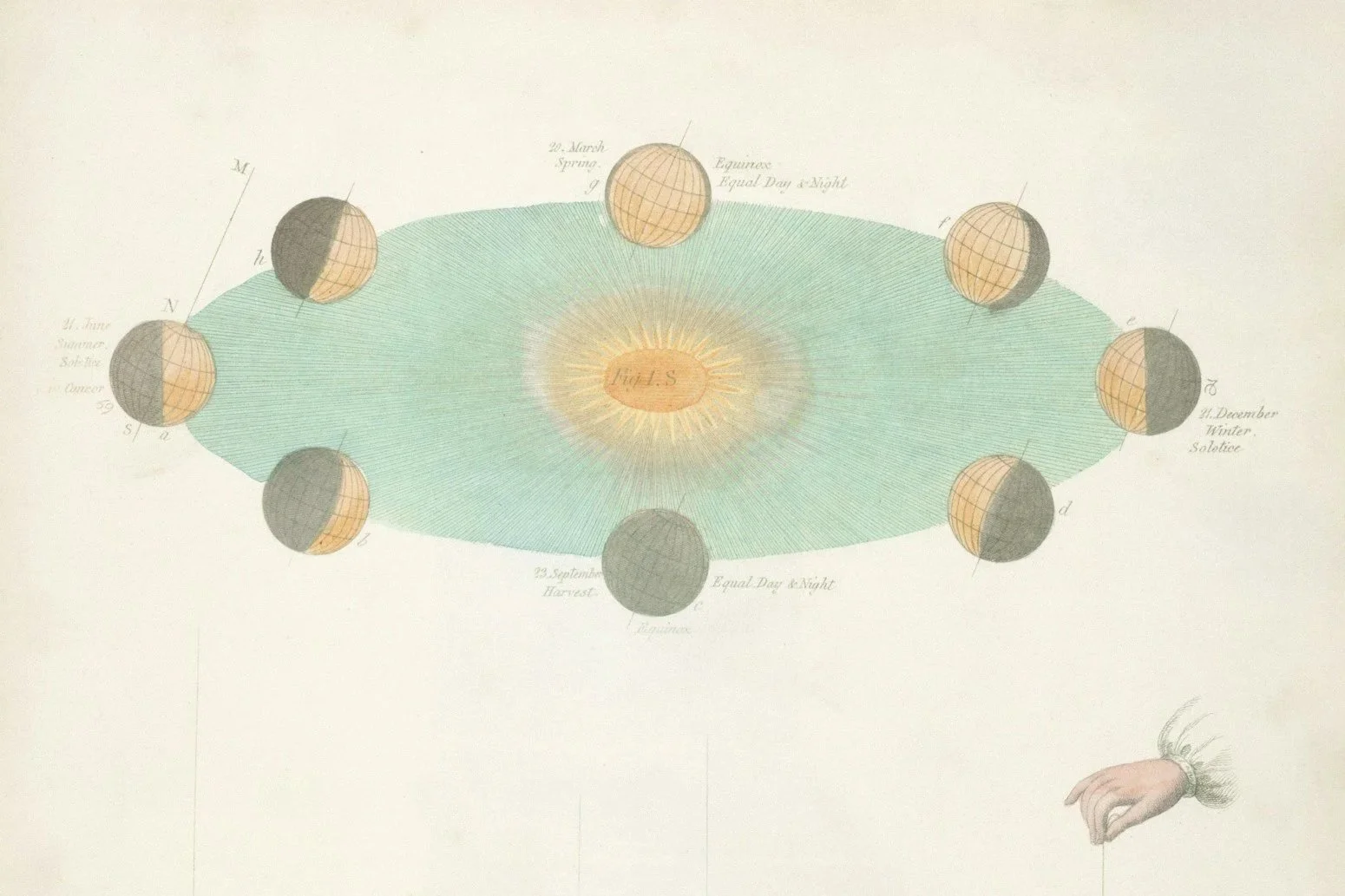
“And yet it moves.” is a phrase supposedly uttered by Galileo Galilei in 1633, after being forced by the Roman Inquisition to recant his claim that the earth moves around the sun. It has come to symbolize a kind of resistance in the face of oppression, a way of saying ‘these are the facts, whatever you say’.
It would be nice to think the dark days of dogma are behind us, but any foray into the media shows a world still awash in it: Those who call for peace are accused of spreading hate, warmongers say they’re making the world a safer place, we’re lectured on morality by the most corrupt and we are told that the super-rich are creating wealth, presumably in the same way an ice cube warms up a drink.
It’s bad enough being told that 2+2=5 by apparently sane and well-educated commentators, but it's especially dispiriting to realise that so many of our fellow humans seem to fall for it. Is there some fundamental flaw in our thinking that lets us fall prey to such doublethink, some weakness ruthlessly exploited by the powerful to keep us chasing our tails while they keep their privilege?
In a word, yes. There are many. The human brain, brilliant though it is, has a number of ‘cognitive biases’ that lead our thoughts astray. We are fundamentally co-operative beings but bombard us with enough stories of violence and catastrophe, stimulate our outrage enough, tell everyone there’s not enough to go around, and we’ll go into survival mode. We’ll believe 2+2=5 just to get through the day.
And yet…we’ve made it this far. We’re not living in empty supermarkets fighting pitched battles over the last tin of baked beans yet. I don’t know how. I don’t think it’s down to some inherent ‘goodness will triumph’ optimism. I think it’s rather that good ideas seem to eventually spread on their own momentum. The things that make our lives better are hard won but tend to stick. Weekends for instance. Universal healthcare. Childhood immunization. Of course, good ideas can be torpedoed by bad faith, but generally people are smart enough to know when they’ve got a good deal.
The same applies to good theories. If you have a theory like evolution which explains why living things are the way they are, why complicate it with myths which always add unnecessary explanations? Nothing is wrong with myths of course. They reach places that the rational mind never will. But when it comes to designing, say, a municipal sewage system I don't want vague intuitions on where to put what pipe, I want good, hard engineering.
Also, there’s the matter of evidence. Even the Forces of Darkness seem aware that they need to show that they’ve done the research, of the power of evidence and statistics. Yes, they’ll drum up their own 'facts', often taken wildly out of context, to support their ideology. Yet the very fact they feel the need to use ‘evidence’ is itself a sign of its strength. They just need to learn the hard lesson that if the facts don’t fit the story, then you have to change the story and not vice versa.
I don’t blame people for falling back on stories to explain the world. We all do it. At one point it must’ve been easier to imagine some Divine Being ferrying the sun across the sky than to grasp the science explaining the orbits of the planets. Yet it seems obvious now, even if you don’t understand the equations. A solid hypothesis survives long after the cultural and social noise has faded away.
This leads to the question of what stories are holding us back now. In the raging torrent of information we’re currently awash in, what will turn out to be sound and useful and what will have turned out to be noise? What will we look back on and say, ‘Blimey, I can’t believe we used to think that?’. This isn’t always obvious. I can think of several times in my own life that I was utterly, stubbornly convinced I was right about something only many years later to see that I was way off the mark.
There are no handy rules I can offer, sadly. I could say ‘trust your gut’, but the gut is a pretty bad guide, especially when it’s hungry. Equally ‘use your intuition’ may be okay when picking out a T-shirt, but not so good when deciding which bus to catch in a foreign city. ‘Follow your heart’ is, frankly, unreliable, and the less said about ‘follow your dreams’ the better, especially if mine are anything to go by.
Likewise, you can’t always trust clever words and phrases no matter how right they sound. Language is a little short of miraculous in what it enables us to do, but also full of rhetoric, evasions, implication and traps. For instance, if I tell you: ‘I am lying’, am I telling the truth?
Yet there is a way, and this is the Way of Not Knowing. The best scientists all made mistakes. So did the best artists. They followed paths that led nowhere and got things wrong, yet this was all okay because they knew it is all about experimenting in order to find out what works and being flexible enough to let go of what doesn’t. The more they discovered, the more they realised what they didn’t know. Through the ages, the best thinkers have been less interested in what they did know, and more curious about what they didn’t or even couldn’t know. ‘I know that I know nothing.'
This hints at a secret as yet undiscovered by the blowhards and bigots and which keeps them tragically stuck. This is of course the awesome power to be gained by appreciating what we don’t know and the relief open to us when we realize that we don’t have to be right about everything. The world moves on anyway.